
















Şakire TAHNAL(*)
The 4 October 2025 local elections in Georgia took place amid a highly polarized political climate, marked by the fallout from the 2024 parliamentary elections and rising tensions between the Georgian government on the one side, and the opposition and European institutions on the other. As Georgia faces conflicting internal views and intense external pressure, the importance of this election goes beyond local politics. What began as a municipal election became a significant turning point in Georgia, revealing how rhetoric emphasizing sovereignty and stability, coupled with external warnings of democratic regression, shaped the country's political landscape.
The political scenery for the 2025 local elections was largely influenced by the contentious 2024 parliamentary elections, which were widely scrutinized by domestic and international observers. According to the Final Monitoring Report of the International Society for Fair Elections and Democracy (ISFED), a local non-governmental organization funded by Western development agencies, four of the five essential democratic principles, universal suffrage, equality, free voting, and secrecy, were undermined due to coercion, abuse of administrative means, manipulation through the newly introduced electronic voting system, and intense pressure on voters (ISFED, 2025).
Furthermore, the European (Union) Parliament (EP) had a tougher attitude against these accusations. In its November 2024 resolution, the parliament dismissed the results, claiming “numerous and serious irregularities,” including documented intimidation, vote manipulation, interference with observers, and manipulation of electronic voting machines. The resolution of the parliament thus called for the elections to be held again under international supervision and for sanctions to be imposed on senior officials of the Georgian Dream (GD) government (ALMQVIST, 2025).
As reported by Civil Georgia (2025), only 12 political parties registered to participate in the local elections, while the number was much higher in the previous parliamentary elections. This sharp decrease is associated with legislative and administrative pressures, changes in election laws, and the fragmentation of the opposition. Several opposition groups boycotted the elections entirely, citing that participation would legitimize an unfair process. Several opted to compete, thereby displaying fragmentation within the opposition. Despite many discussions, according to the Central Election Commission, on the election day, Georgian Dream received about 80% of the total vote.
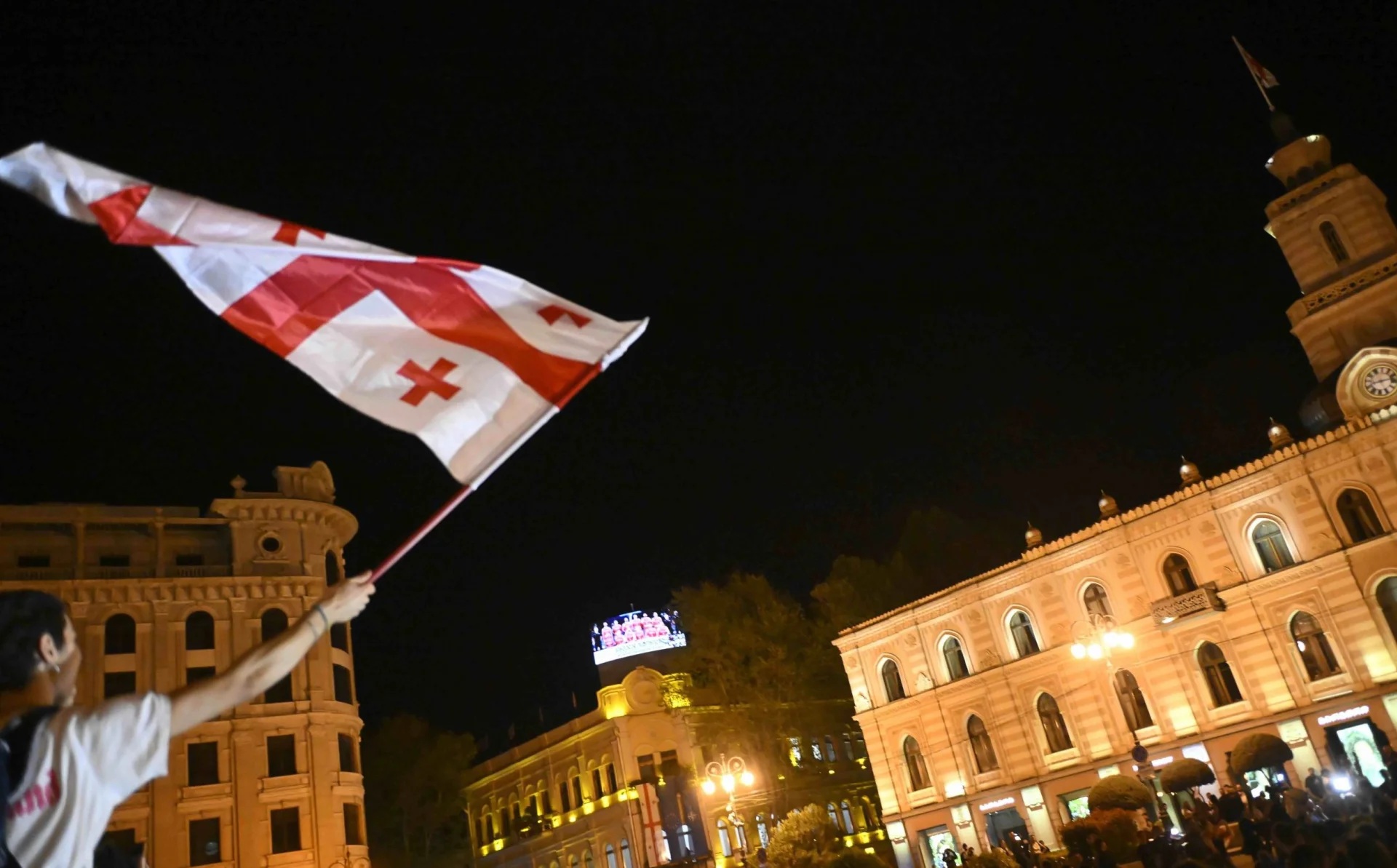
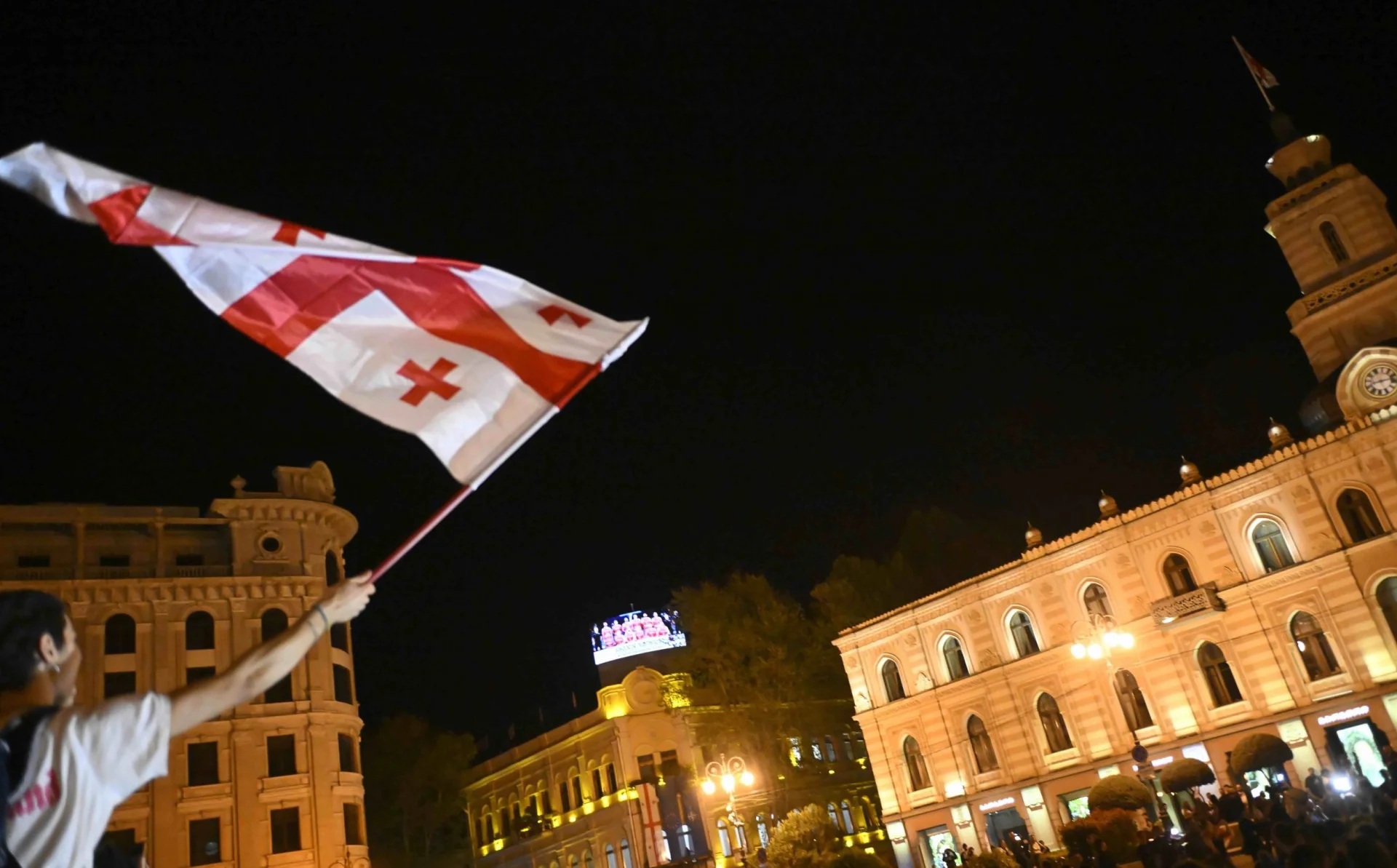
Right after the announcement of the results, protests broke out in Tbilisi and other cities, involving clashes between protesters and police who used tear gas and water cannons (EU NeighboursEast, 2025). As a result, international organizations voiced their concerns. For instance, the Organization for Security and Co-operation in Europe Parliamentary Assembly (OSCE PA) called for restraint, urged all parties to commit to working through legitimate political processes, and warned that democratic governance must be based on “law, accountability, and peaceful political dialogue” (OSCE PA, 2025). Additionally, EP went further, describing the elections as part of a “months-long crackdown on civil society, independent media, and political opposition” (McAllister et al., 2025).
Besides these, despite international criticism, Georgian Dream leaders have claimed that the 2025 elections can be acknowledged as proof of the reaffirmation of public trust and national sovereignty. Before the elections, for instance, Prime Minister Irakli Kobakhidze emphasized that Georgia is committed to “a steady and irreversible path toward EU membership,” describing the election as evidence of the Georgian people’s trust in democratic institutions (Georgia's PM reaffirms EU Path and Democratic credentials ahead of local elections - 1TV, 2025).
In this context, Georgian Dream’s founder and honorary chairman, Bidzina Ivanishvili, expressed confidence in the legitimacy of the results. Indeed, while voting, he mentioned that it was a sign of free choice and the maturity of Georgian democracy (Bidzina Ivanishvili: GD ensured free choice, hope citizens to be active and make right decision - 1TV, 2025). As a response to the protests, he emphasized that a party supported by 80% of the country could not be overthrown by 10,000 people on the streets and also described the uprising as an attempt by those who are eager to undermine political stability. According to the ruling party’s perspective, the criticisms from the EU and other international actors are based on political bias, a misinterpretation of Georgia’s context (How can a party backed by 80% be overturned by just 10,000 people? Impossible - Bidzina Ivanishvili | Rustavi2 2025 & GEORGIA PARLIAMENTARY ELECTIONS 26 OCTOBER 2024 ODIHR Election Observation Mission Final Report, 2024). Furthermore, although the vast majority of the opposition and civil society underlined a pattern of democratic backsliding, the ruling Georgian Dream advocated that the EU’s reaction is a baseless intervention in Georgia’s internal affairs. This fundamental disagreement appears to have generated controversial approaches regarding the 2025 local elections.
Indeed, opposition parties and many civil society groups view the 2025 elections as part of a longer democratic backsliding. ISFED’s documentation on the coercive use of administrative resources, media imbalance, and structural manipulation during the 2024 parliamentary elections was cited as evidence that institutions had lost their independence going into 2025 (GEORGIA’S 2024 PARLIAMENTARY ELECTIONS FINAL MONITORING REPORT, 2025). Opposition leaders also argued that Georgian Dream used various administrative tools to consolidate power, such as restricting election observers and proposing the elimination of out-of-country voting (Number of political parties running in 2025 local elections down to 12, 2025). In addition to these groups, international think tanks echoed these concerns. For instance, the Carnegie Endowment cautioned that GD’s strategy on the opposition’s boycott enabled it to consolidate control over institutions and reduce meaningful political competition as it entered local elections (Kitachaev, 2025).
The already tense relations between Georgia and the European Union (EU) have deteriorated further. Following the vote, EU High Representative Kaja Kallas and Commissioner Marta Kos condemned the Georgian government’s attitude and released a statement to remind Georgia of respecting freedom of assembly, restoring calmness, and standing firm against the attacks on EU diplomats in the context of disinformation. They also emphasized the latest laws targeting civil society to criticize the imprisonment of opposition figures, and changes to the electoral law favoring GD, claiming that these “drastically reduced the possibility of competitive elections” (EU NeighboursEast, 2025).
In the aftermath of the 2025 elections, it has become apparent that Georgia's role in the region has also changed. While EU seeks greater connectivity, diversity, and strategic autonomy, as Kobakhidze emphasized, Georgia's position in the Middle Corridor, linking Europe and Asia, gives the country greater importance (Georgia's PM reaffirms EU Path and Democratic credentials ahead of local elections - 1TV, 2025).
However, given Russia’s persistent presence in Georgian politics through various channels, and the post-conflict transitions of Armenia and Azerbaijan following the 2020 Second Karabakh War, discourses on democratic instability could undermine Georgia’s reliability as a partner. These controversial narratives over Georgia’s political contradictions may thus shape the new geopolitical arrangements emerging in the South Caucasus (GEORGIA PARLIAMENTARY ELECTIONS 26 OCTOBER 2024 ODIHR Election Observation Mission Final Report, 2024).
To summarize, the October 2025 local elections have reinforced two opposing views of Georgia’s political future. For Georgian Dream, the elections have confirmed stability, sovereignty, and public confidence, whereas for the opposition, they represent a democratic decline, institutional takeover, and a shift away from Europe. On the other hand, European institutions raised urgent questions regarding Georgia’s preparedness for meaningful integration. Ultimately, the importance of the 2025 elections lies not only in the allocation of municipal power but also in how the profound struggle over Georgian political identity manifests itself and shapes the country’s trajectory in the coming years.
*Şakire (Furtun) Tahnal is an independent researcher who graduated from Bilkent University's Department of Political Science and Public Administration and holds a master's degree in Middle Eastern Studies from Middle East Technical University. Tahnal’s work focuses on international relations, regional politics, foreign policy, and the European Union's neighborhood policies.
**Picture: A scene from the protests in Georgia regarding the recent elections – Source: EUNeighboursEast.eu
Reference List
(2024). (rep.). GEORGIA PARLIAMENTARY ELECTIONS 26 OCTOBER 2024 ODIHR Election Observation Mission Final Report (pp. 1–53). Warsaw.
(2025). (rep.). GEORGIA’S 2024 PARLIAMENTARY ELECTIONS FINAL MONITORING REPORT (pp. 1–45).
ALMQVIST, V. (n.d.). Parliament calls for new elections in Georgia: News: European Parliament. Parliament calls for new elections in Georgia | News | European Parliament. https://www.europarl.europa.eu/news/en/press-room/20241121IPR25549/parliament-calls-for-new-elections-in-georgia
Bidzina Ivanishvili: Gd ensured free choice, hope citizens to be active and make right decision - 1TV. Georgian Public Broadcaster. (2025a, October 4). https://1tv.ge/lang/en/news/bidzina-ivanishvili-gd-ensured-free-choice-hope-citizens-will-be-active-and-make-right-decision/
Elections in Georgia: EU rejects disinformation regarding its role in protests - EU neighbours East. EU NEIGHBOURSEAST. (2025, October 6). https://euneighbourseast.eu/news/latest-news/elections-in-georgia-eu-rejects-disinformation-regarding-its-role-in-protests/
Georgia’s PM reaffirms EU Path and Democratic credentials ahead of local elections - 1TV. Georgian Public Broadcaster. (2025, October 1). https://1tv.ge/lang/en/news/georgias-pm-reaffirms-eu-path-and-democratic-credentials-ahead-of-local-elections/
How can a party backed by 80% be overturned by just 10 000 people? Impossible - Bidzina Ivanishvili | Rustavi2. NEWS. (2025, October 4). https://rustavi2.ge/en/news/327558
Kitachaev, B. (2025, October 13). Georgia’s ruling party uses opposition’s election boycott to seal its control of Institutions. Carnegie Endowment for International Peace. https://carnegieendowment.org/russia-eurasia/politika/2025/10/georgia-oppositions-protests?lang=en
McAllister, D., Jukneviciene, R., Usakovs, N., Lagodinsky, S., & Satouri, M. (2025). (rep.). Joint Statement on the Local Elections in Georgia. Strasbourg.
Number of political parties running in 2025 local elections down to 12. Civil Georgia. (2025, September 23). https://civil.ge/archives/702043
© 2009-2025 Avrasya İncelemeleri Merkezi (AVİM) Tüm Hakları Saklıdır
Henüz Yorum Yapılmamış.
-
 İKİ YÜZ YILLIK ERMENİ SALDIRGANLIĞININ GÜÇ ALDIĞI KAYNAKLAR
Sabir ŞAHTAHTI 28.06.2019 -
 ORTA KORİDOR VE POTANSİYEL AVANTAJLARI - 12.10.2022
Deniz ÜNVER 12.10.2022 -
MİLLÎ KAHRAMAN Rauf. R. DENKTAŞ
Tugay ULUÇEVİK 20.01.2012 -
KIBRISLI RUMLAR NEREYE KOŞUYOR
Ata ATUN 21.02.2013 -
 İMPARATORLUKTAN CUMHURİYETE TÜRKİYE’NİN BALKAN POLİTİKASI: SÜREKLİLİKLER, KIRILMALAR VE YENİ DENGE ARAYIŞLARI - TOGÜ - 29.04.2026
Teoman Ertuğrul TULUN 14.05.2026