














Introduction
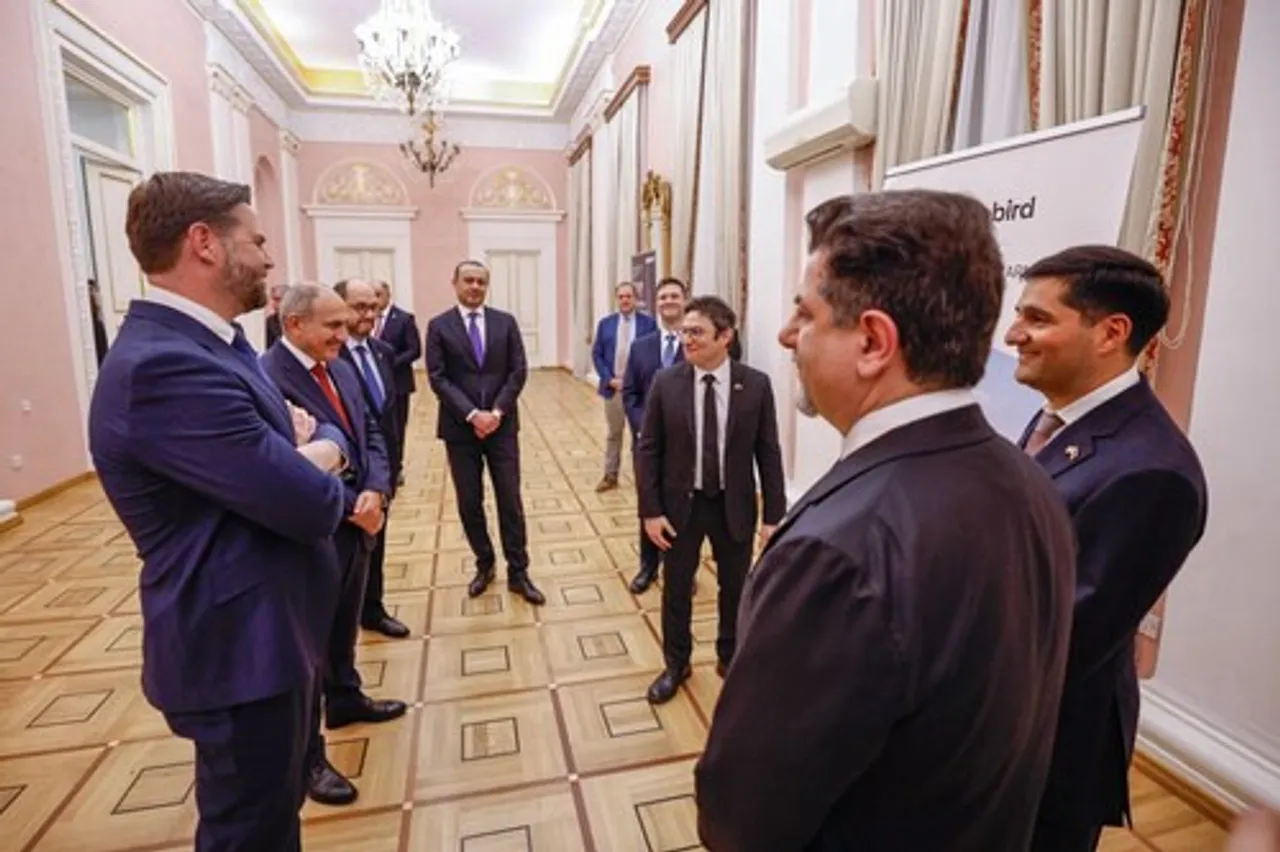
The Armenia‑based artificial intelligence megaproject has been promoted as a rapidly expanding high‑technology initiative, supported by significant external financial and political backing and presented as a future regional “AI hub.”[1] In public discourse, it is largely framed as a flagship of innovation, investment, and digital modernisation, with an emphasis on its transformative economic potential.
This commentary, however, approaches the project primarily as a matter of security and critical digital infrastructure, rather than as a neutral technology park. It therefore asks a central question: how prudent is it for NATO members to place key AI and cloud capacities in non‑NATO, geopolitically fragile environments, where unresolved conflicts and shifting alignments already challenge the coherence of regional order and cooperative security?[2]
Regional security and cloud disruptions
Against this backdrop, Armenia, situated in the South Caucasus between Turkiye, Azerbaijan, Georgia, Iran, and within Russia’s extended security perimeter, is not a member of NATO and remains entangled in post‑war disputes and unresolved border and status questions. Its security posture has been marked by a gradual reorientation away from exclusive reliance on Russia, without any corresponding integration into collective defence guarantees comparable to those of the Alliance. [3]
At the same time, recent incidents in which major cloud data centers in the Gulf lost power and connectivity after being struck by “objects” amid intensified US–Israel–Iran confrontation have shown that ostensibly neutral digital infrastructure can rapidly become exposed to kinetic risk. Viewed together, these developments underline that large AI and cloud facilities in contested regions must be analysed within a broader law–history–politics framework of regional security, rather than through a purely commercial or technological lens.[4]
Critical infrastructure, cooperative security, strategic dependency
The regional picture outlined above makes it necessary to conceptualise large AI and cloud systems as critical digital infrastructure embedded in existing security architectures, rather than as ordinary “technology parks” primarily evaluated by investment size or innovation discourse. In alliance and partnership settings, the notion of cooperative security presupposes that states sharing such infrastructure also share basic threat perceptions, treaty obligations, and crisis‑management norms; where this common basis is lacking, interdependence may turn into an additional channel of vulnerability.
In the context of NATO, whose collective‑defence logic rests on the assumption that vital capabilities remain reliably available within or under the protection of the Alliance, relocating key digital assets to non‑allied territories risks introducing gaps between formal guarantees and actual operational resilience. Against this backdrop, the concept of strategic dependency becomes central: when indispensable data processing, storage, and AI capabilities are outsourced to non‑allied territories with unresolved security dilemmas, alliance members risk creating asymmetric exposure to political pressure, kinetic disruption, or denial of access at precisely the moment when these capabilities would be most needed.
Armenia’s AI hub through an alliance‑security lens
Within this conceptual setting, the Armenia‑based AI hub is publicly narrated as a story of innovation, investment, and talent attraction, presenting itself as an engine of digital transformation and regional modernisation. This narrative, however, tends to bracket precisely those elements highlighted in the background and conceptual sections: Armenia’s unresolved conflicts, its location outside any collective‑defence system comparable to NATO, and the demonstrated vulnerability of major cloud infrastructures in other conflict‑adjacent regions.
Emphasis on regulatory compliance and export‑control authorisations projects an image of robustness, yet such legal‑bureaucratic filters do not in themselves address the physical and geopolitical risks of escalation, targeting, or coercive leverage over critical facilities. If NATO members or allied institutions were to host sensitive AI workloads and data in such an environment, the distinction between commercial outsourcing and de facto delegation of core security‑relevant functions would become increasingly blurred. From Türkiye’s broader regional security perspective – which increasingly treats cyber, maritime, and conventional domains as an integrated whole – such inconsistencies between territorial defence principles and the externalisation of critical digital infrastructures appear particularly problematic, as they risk creating vulnerabilities precisely along the South Caucasus–Black Sea arc where strategic stability is already fragile.[5]
Normative assessment and policy angle
Against the background of Armenia’s unsettled security environment and the demonstrated vulnerability of major cloud infrastructures in other conflict‑adjacent regions, the relocation of mission‑critical AI and data capacities to non‑NATO territories appears both normatively and strategically problematic for the Alliance. From a cooperative security perspective, it is difficult to justify an arrangement in which essential digital capabilities underpinning defence, crisis management, or strategic communication are hosted in locations outside collective defence guarantees and exposed to unresolved regional disputes. [6]
For Türkiye, which increasingly conceptualises cyber, digital, and maritime spaces as interlinked dimensions of a single regional security complex stretching from the Black Sea to the South Caucasus, such externalisation risks importing new vulnerabilities into an already fragile arc of stability. A prudential approach would therefore require NATO members and regional partners to prioritise keeping indispensable digital infrastructure within alliance perimeters, or at least to subject any extra‑alliance hosting to robust, treaty‑like multilateral safeguards that clearly regulate access, protection, and crisis‑time decision‑making.
Conclusion
Taken together, the regional security environment in the South Caucasus, the demonstrated vulnerability of cloud infrastructures in nearby conflict‑adjacent theatres, and the specific alliance‑security logic of NATO all point to the same conclusion: the geography of AI and cloud systems must not be allowed to outrun the geography of collective defence and legal responsibility. The Armenia‑based AI hub illustrates how high‑technology projects in contested regions can generate new forms of strategic dependency when they host capabilities that are increasingly central to deterrence, crisis management, and defence planning. For Türkiye and other NATO members, this calls for continuous monitoring of similar initiatives through a law–history–politics lens that takes both regional disputes and alliance commitments seriously, rather than through a narrow focus on investment or innovation. Conceptual consistency requires that critical digital infrastructures be understood and regulated as integral components of cooperative security and regional order, not as detached technical ventures that can safely be externalised beyond the reach of established collective‑security frameworks.
*Picture: DPIndia
[1] [1] HPC Wire Editorial, “Firebird and US Government Move Armenia AI Megaproject into $4B Phase Two,” HPC Wire, 10 February 2026, accessed02 March 2026 , https://www.hpcwire.com/off-the-wire/firebird-and-us-government-move-armenia-ai-megaproject-into-4b-phase-two/
[2] Labarre, F., & Niculescu, G. (eds.), New Security Arrangements for the South Caucasus? Regional Stability in the South Caucasus Study Group (RSSC SG), 26th Workshop report, Austrian National Defence Academy, 2024 ; Teoman Ertuğrul Tulun, “Integratıng Nato’s Cybersecurıty And Marıtıme Strategy: Upholdıng The Montreux Conventıon,” AVİM Analysis No: 2024/12 (and PDF version Analysis No: 2024/12, 6 August 2024) https://avim.org.tr/en/Analiz/INTEGRATING-NATO-S-CYBERSECURITY-AND-MARITIME-STRATEGY-UPHOLDING-THE-MONTREUX-CONVENTION
[3] Tutku Dilaver, “Security Balance In South Caucasus , ” AVİM Analysis No: 2023/02 (19 January 2023) https://avim.org.tr/en/Analiz/SECURITY-BALANCE-IN-SOUTH-CAUCASUS ; Emil Avdaliani, “NATO and the South Caucasus: Lack of Vision or Strategic Withdrawal?,” Caucasus Watch, [day month year of publication], accessed 02 March, 2026, https://caucasuswatch.de/en/insights/nato-and-the-south-caucasus-lack-of-vision-or-strategic-withdrawal.html; North Atlantic Treaty Organization (NATO), “Relations with Armenia,” last updated 29 May 2024, accessed accessed 02 March, 2026, https://www.nato.int/en/what-we-do/partnerships-and-cooperation/relations-with-armenia
[4] India Time Editorial, “Iran-Israel War: Amazon Cloud Unit Flags Issues at Bahrain, UAE Data Centers amid Iran Strikes,” The Economic Times 02 March 2026, accessed 02 March 2026, https://economictimes.indiatimes.com/tech/technology/iran-israel-war-amazon-cloud-unit-flags-issues-at-bahrain-uae-data-centers-amid-iran-strikes/articleshow/128939726.cms
[5] Dr. Frédéric Labarre and Dr. George Niculescu, eds., New Security Arrangements for the South Caucasus: 26th Workshop of the Study Group “Regional Stability in the South Caucasus” – Policy Recommendations (Vienna: Bundesministerium Landesverteidigung December 2023, 1-4, https://www.bmlv.gv.at/wissen-forschung/publikationen/publikation.php?id=1186
[6] North Atlantic Treaty Organization. “The Cyber Defence Pledge.” Warsaw Summit, 9 July 2016. Accessed 02 March 2026. https://www.nato.int/cps/en/natohq/official_texts_133177.htm
© 2009-2025 Center for Eurasian Studies (AVİM) All Rights Reserved
No comments yet.
-
 RELIGIOUS ASSIMILATION POLICIES IN GREECE: PRESSURE ON TURKISH MUFTIS AS A CONTINUATION OF MINORITY RIGHTS VIOLATIONS
Teoman Ertuğrul TULUN 21.08.2025 -
 URGENT NEED TO STRENGTHEN THE EFFECTIVE IMPLEMENTATION OF THE BIOLOGICAL WEAPONS CONVENTION
Teoman Ertuğrul TULUN 16.04.2020 -
 THE NINETY-SEVENTH ANNIVERSARY OF THE SIGNING OF THE PEACE TREATY OF LAUSANNE
Teoman Ertuğrul TULUN 21.07.2020 -
 MONTREUX, CONSTRUCTIVE EURASIANISM, AND BLACK SEA STABILITY: REASSESSING TÜRKİYE’S STRAITS REGIME ON ITS 90TH ANNIVERSARY
Teoman Ertuğrul TULUN 22.07.2026 -
 POPE’S VISIT TO AZERBAIJAN: A TEST FOR UNIVERSAL FRATERNITY
Teoman Ertuğrul TULUN 09.09.2016
-
THE NECESSITY TO OPEN THE ARCHIVES AND ESTABLISH A JOINT COMMISSION OF HISTORIANS AND EXPERTS HAVE COME TO THE FORE ONCE AGAIN
Alev KILIÇ 21.12.2012 -
 THE ANNOYANCE FELT BY ANCA TOWARDS “OTTOMAN LIEUTENANT”
Hazel ÇAĞAN ELBİR 31.03.2017 -
 THE ARMENIAN NATIONAL COMMITTEE OF AMERICA'S (ANCA) OUTRAGEOUS SMEAR CAMPAIGN AGAINST DISNEY PLUS'S ATATURK SERIES PROJECT
AVİM 13.07.2023 -
 DRAFT RESOLUTION ON “GENOCIDE” IN THE US SENATE
Ömer Engin LÜTEM 06.04.2014 -
 EASTERN BALKANS: TURKEY
Vuslat Nur ŞAHİN 29.03.2019
-
25.01.2016
THE ARMENIAN QUESTION - BASIC KNOWLEDGE AND DOCUMENTATION -
12.06.2024
THE TRUTH WILL OUT -
27.03.2023
RADİKAL ERMENİ UNSURLARCA GERÇEKLEŞTİRİLEN MEZALİMLER VE VANDALİZM -
17.03.2023
PATRIOTISM PERVERTED -
23.02.2023
MEN ARE LIKE THAT -
03.02.2023
BAKÜ-TİFLİS-CEYHAN BORU HATTININ YAŞANAN TARİHİ -
16.12.2022
INTERNATIONAL SCHOLARS ON THE EVENTS OF 1915 -
07.12.2022
FAKE PHOTOS AND THE ARMENIAN PROPAGANDA -
07.12.2022
ERMENİ PROPAGANDASI VE SAHTE RESİMLER -
01.01.2022
A Letter From Japan - Strategically Mum: The Silence of the Armenians -
01.01.2022
Japonya'dan Bir Mektup - Stratejik Suskunluk: Ermenilerin Sessizliği -
03.06.2020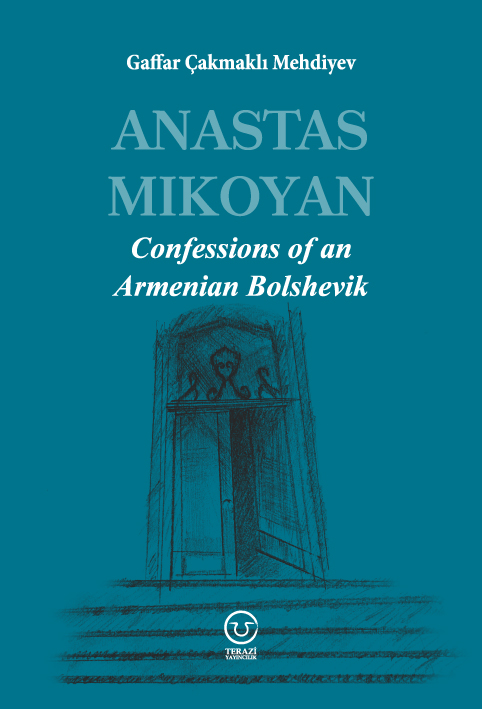
Anastas Mikoyan: Confessions of an Armenian Bolshevik -
08.04.2020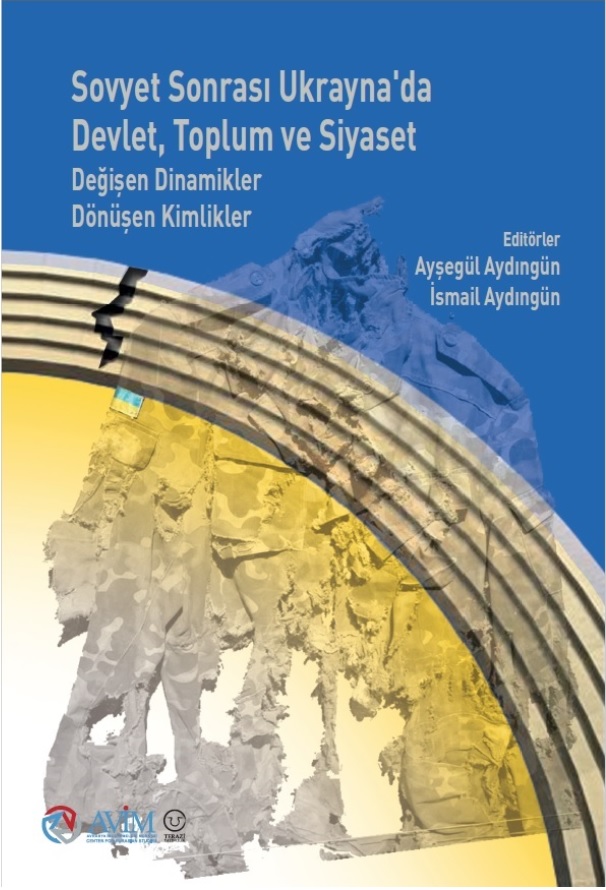
Sovyet Sonrası Ukrayna’da Devlet, Toplum ve Siyaset - Değişen Dinamikler, Dönüşen Kimlikler -
12.06.2018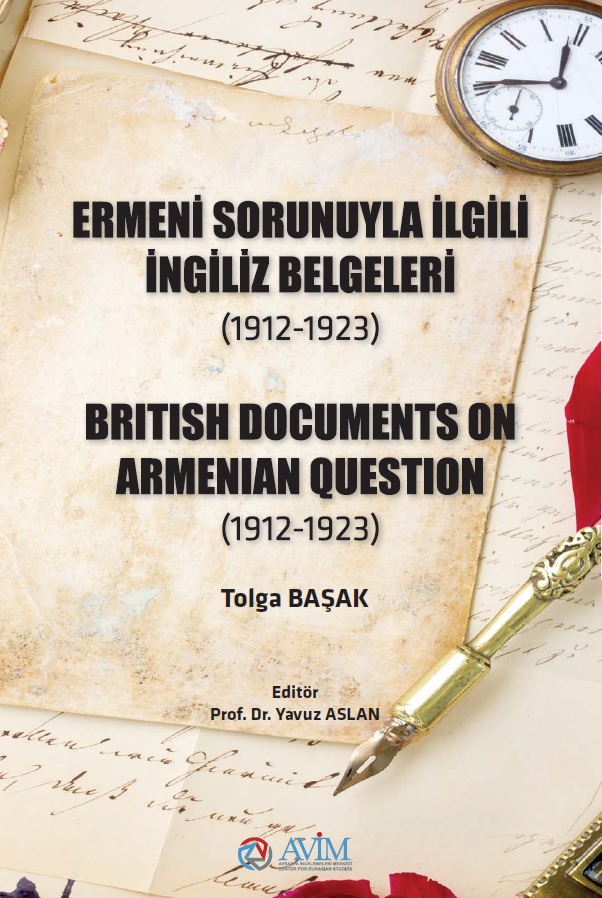
Ermeni Sorunuyla İlgili İngiliz Belgeleri (1912-1923) - British Documents on Armenian Question (1912-1923) -
02.12.2016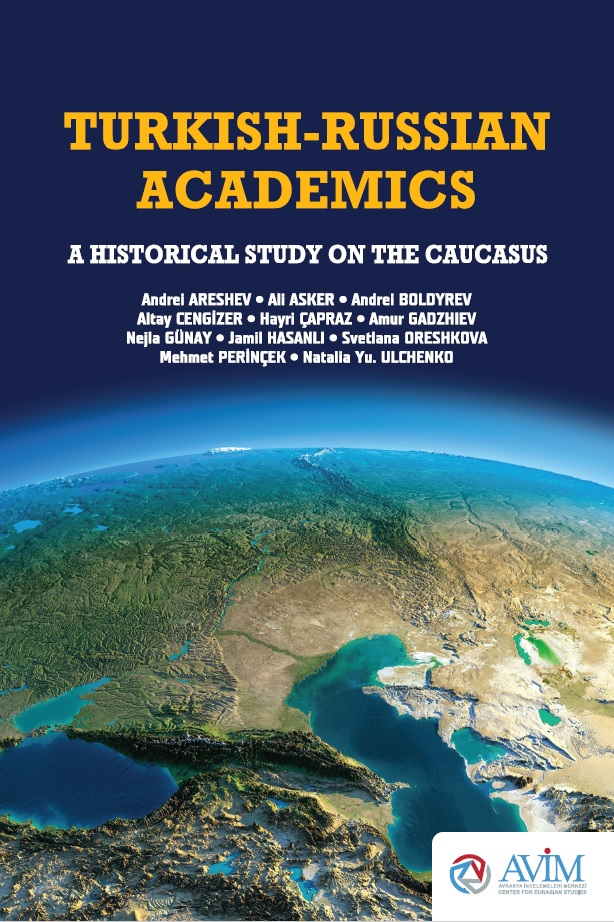
Turkish-Russian Academics: A Historical Study on the Caucasus -
01.07.2016
Gürcistan'daki Müslüman Topluluklar: Azınlık Hakları, Kimlik, Siyaset -
10.03.2016
Armenian Diaspora: Diaspora, State and the Imagination of the Republic of Armenia -
24.01.2016
ERMENİ SORUNU - TEMEL BİLGİ VE BELGELER (2. BASKI)
-
AVİM Conference Hall 24.01.2023
CONFERENCE TITLED “HUNGARY’S PERSPECTIVES ON THE TURKIC WORLD"