














The American Newsweek magazine seemingly has a quota for regularly publishing opinion articles written to promote the Armenian perspective, which would be fine by itself were it not for the fact that the said articles tend to veer towards propaganda targeting Türkiye and Azerbaijan. Interestingly, Armenia and any other actor supporting Armenia’s current government now seem to be in the crosshairs as well. Armenian Prime Minister Nikol Pashinyan’s reformist agenda (that sometimes leads to heated controversies[1]), and his efforts to make peace with Azerbaijan and normalize relations with Türkiye have caused resentment not only some circles in Armenia, but also in the Armenian Diaspora.
A recent opinion piece focusing on the planned Trump Route for International Peace and Prosperity (TRIPP), a “rebranded Zangezur Corridor”[2] connecting Azerbaijan with its exclave of Nakhchivan using Armenia’s Syunik province, reflects the resentment felt by some diasporan Armenians. To be operated by an American company, TRIPP is marketed as bringing Armenia and Azerbaijan together under a peaceful framework with the backing of the United States. The Newsweek article, however, rejects this and expresses criticism against all the countries involved. Azerbaijan is accused of multiple misdeeds: ethnically cleansing Karabakh of its Armenian population, erasing the Armenian cultural presence in Karabakh, holding Armenian captives on spurious political grounds, and meddling in Armenia’s internal affairs by insisting on constitutional amendment. The US is accused of putting aside its democratic principles for the sake gaining a foothold in the South Caucasus, appeasing Azerbaijan despite its multiple claimed transgressions, and thus jeopardizing US “global leadership”. Finally, Armenia is accused of essentially submitting to American influence without getting anything tangible in return and paving the way for becoming a dependent state.
The problem with these criticisms is twofold; they are factually wrong (or dubious) and they misinterpret the parameters of the Armenia-Azerbaijan peace process.
Azerbaijan did not ethnically cleanse Karabakh of Armenians. Almost all the Armenians living in Karabakh left the region at the urging of Armenian officials or their own volition because they did not want to live under Azerbaijani rule. This has been corroborated by the statements of Armenian officials themselves, the Armenians who fled the region, and the officials at the UN and the International Red Cross.[3]
Armenians and Azerbaijanis have accused each other of erasing the other sides’ cultural presence in Karabakh for a long time. The issue entails many points that go as deep as differentiating between the remnants of the Caucasian Albanians (who were Christians) from the cultural monuments of the Karabakh Armenians[4]. An entire academic article can be written on debating these points.
The Armenian prisoners in Azerbaijan are the former officials of the secessionist Armenian entity that occupied Karabakh for around thirty years with the strong backing of Armenia. They are not innocent civilians, unlike what the Newsweek article implies, and are responsible for running a political system that displaced hundreds of thousands of Azerbaijanis, illegally exploiting the natural resources Karabakh, and inflicting extensive ecological damage in the region out of negligence during their illegal economic activities in the region.
Azerbaijan’s insistence on Armenia changing its constitution is not driven out of a desire to meddle in Armenian politics, but out of a desire to prevent another Karabakh conflict from ever happening again. The references and implications being made in the Armenian Constitution towards Azerbaijan’s Karabakh territory[5] was one the factors that legitimized -in the eyes of many Armenians- the occupation of Karabakh by Armenia and the Armenian separatists for nearly 30 years. In other words, Azerbaijan’s insistence on constitutional change in Armenia is a defense mechanism to safeguard Azerbaijan from a possible future irredentist aggression.
It has been known for decades now by both the students of the Political Science and International Relations disciplines and the Global South that ideals such as democracy, human rights, and rule of law espoused by the US have been applied selectively when it comes to foreign policy objectives. This has been demonstrated repeatedly in recent history: from the 2003 invasion of Iraq on completely false pretexts, to the unconditional support provided to Israel despite war crimes being committed in Gaza since October 2023, and finally to the January 2026 attack against Venezuela and the kidnapping of its president. In other words, the foreign policies pursued by the US (or the West in general for that matter) sometimes have little (or no) connection to its espoused ideals.[6]
Furthermore, the TRIPP project is not an appeasement for Azerbaijan. Quite the contrary, it is to the benefit of the US in terms of power projection and of Armenia in terms of coming closer to the US and the West in general. TRIPP was not Azerbaijan’s preferred solution for the Zangezur Corridor issue, since Azerbaijan wished for the issue to be resolved between itself and Armenia only and did not want any external actors, be it Russia, Iran, or the US. TRIPP seems, however, to have been the only feasible way to gain Armenia’s consent because American involvement brought a sense of protection for Armenia now that Armenia’s traditional backer, Russia, has partially retreated from the South Caucasus due to the ongoing war of attrition in Ukraine.
It is thus difficult to read TRIPP as a failure of Armenia’s foreign policy. TRIPP is part of Armenia’s efforts to slowly but methodically push Russia away (which it accuses of failing to live up to its promises of CSTO protection) and anchor the US in the region, which promises to bring American investment and military support to Armenia with it. This has already born its fruits, from the 9 billion USD deal to bring high tech modular nuclear reactor technology to Armenia and the acquisition of American reconnaissance drones,[7] to Armenia securing a 4.5 billion USD deal that will help establish a large scale AI factory and data center[8] that will allow Armenia go gain a competitive edge in the global “AI arms race”. All of these must be taken into consideration along with the growing institutional ties between the European Union and Armenia, the revamping of Armenia’s military doctrines and training to better respond to recent developments in warfare, and Armenia’s program of diversifying its military arsenal by acquiring various hardware from the likes of France and India. These developments do not paint an Armenia submitting to a status of dependence, but rather a country trying to find its footing in the changing circumstances of the international system and balance out the conflicting interests in the South Caucasus and beyond.
As such, the Newsweek article mentioned at the beginning fails to properly assess what is developing in the protracted peace process between Armenia and Azerbaijan. It also reflects a rigid diasporan mindset disconnected from the realities of the South Caucasus that cannot view Azerbaijan (and its ally Türkiye) as anything other than a mortal enemy, which considers reaching compromises with Azerbaijan in the name of peace as the selling out of the Armenian Cause, and which claims Karabakh is an exclusively Armenian territory no matter what international law and historical findings indicate.
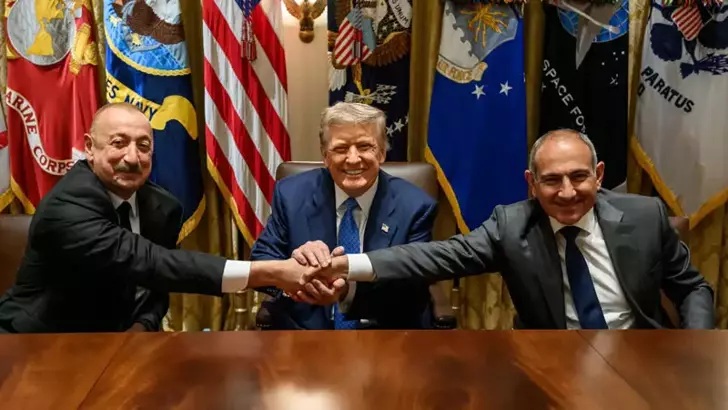
*Picture: Armenian Prime Minister Nikol Pashinyan, Azerbaijani President İlham Aliyev, and American President Donald Trump jointly shake hands during their trilateral meeting. - Source: DHA
[1] Selenay Erva Yalçın, “Paşinyan Ve Kilise Yönetimi Arasındaki Gerilimde Son Durum”, Avrasya İncelemeleri Merkezi (AVİM), Yorum No: 2026/6, 27 Ocak 2026, https://avim.org.tr/tr/Yorum/PASINYAN-VE-KILISE-YONETIMI-ARASINDAKI-GERILIMDE-SON-DURUM
[2] Stephan Pechdimaldji, “The Art of a Bad Deal”, Newsweek, January 29, 2026, https://www.newsweek.com/the-art-of-a-bad-deal-opinion-11418962
[3] Mehmet Oğuzhan Tulun, “The Battle To Control The Narrative Over Karabakh: Armenian Civilian Safety Vs. Azerbaijani State Sovereignty”, Center for Eurasian Studies (AVİM), Analysis No: 2023/19, October 6, 2023, https://avim.org.tr/en/Analiz/THE-BATTLE-TO-CONTROL-THE-NARRATIVE-OVER-KARABAKH-ARMENIAN-CIVILIAN-SAFETY-VS-AZERBAIJANI-STATE-SOVEREIGNTY . Also see: Selenay Erva Yalçın, “Karabağ’da Kalan Ermenilerin Nakli Ve Tahrike Yönelik Propagandalar”, Avrasya İncelemeleri Merkezi (AVİM), Yorum No: 2026/8, 30 Ocak 2026, https://avim.org.tr/tr/Yorum/KARABAG-DA-KALAN-ERMENILERIN-NAKLI-VE-TAHRIKE-YONELIK-PROPAGANDALAR
[4] Naila Velihanly, "Some of the Historiographical Problems of Zangezur’s History", Review of Armenian Studies (RAS), Issue 45 (2022): 107-126.
[5] Alev Kılıç, “Facts and Comments”, Review of Armenian Studies (RAS), Issue 49 (2024): 13.
[6] Teoman Ertuğrul Tulun, “The Myth Of Rules-Based International Order Is Under Destruction”, Center for Eurasian Studies (AVİM), Commentary No: 2026/10, February 13, 2026, https://avim.org.tr/en/Yorum/THE-MYTH-OF-RULES-BASED-INTERNATIONAL-ORDER-IS-UNDER-DESTRUCTION. Also see: “Davos LIVE: Canadian PM Mark Carney speaks at World Economic Forum”, Associated Press, January 20, 2026, https://www.youtube.com/live/dE981Z_TaVo?si=b9_f9DgFyMj1wfvl
[7] Emil Avdaliani, “Kremlin Shivers as US Enters the South Caucasus”, Center for European Policy Analysis (CEPA), February 11, 2026, https://cepa.org/article/kremlin-shivers-as-us-enters-the-south-caucasus/
[8] “Firebird and U.S. Government Announce Phase 2 of Armenia AI Megaproject, Scaling it to $4 Billion and 50,000 GPU in 2026”, ArmenPress, February 10, 2026, https://armenpress.am/en/article/1241770
© 2009-2025 Center for Eurasian Studies (AVİM) All Rights Reserved
No comments yet.
-
 WHAT IS THE WORLD COUNCIL OF CHURCHES?
Mehmet Oğuzhan TULUN 06.03.2014 -
 ORTHODOX COUNCIL TO MEET AFTER 1200 YEARS
Mehmet Oğuzhan TULUN 09.04.2014 -
 AZERBAIJAN-ARMENIA PEACE TREATY PROCESS AND ATTEMPTS TO UNDERMINE TÜRKİYE-AZERBAIJAN RELATIONS - II
Mehmet Oğuzhan TULUN 21.11.2025 -
 PERSISTING IN THE MISTAKES OF THE PAST
Mehmet Oğuzhan TULUN 28.04.2016 -
 TURKISH-ARMENIAN CONTROVERSY CONTINUES TO BE INSTRUMENTAL FOR THE CHURCH TO INCITE RELIGIOUS AND ETHNIC ANIMOSITY
Mehmet Oğuzhan TULUN 21.06.2015
-
GERMANY’S POLITICAL MANEUVERINGS REGARDING THE EVENTS OF 1915
Mehmet Oğuzhan TULUN 02.03.2016 -
 “YET ANOTHER DECISION AGAINST ARMENIA ON NAGORNO-KARABAKH” – COMMENTARY PUBLISHED IN HURRIYET DAILY
Turgut Kerem TUNCEL 18.11.2015 -
 CONFERENCE ORGANIZED BY LSE’S CONTEMPORARY TURKISH STUDIES CHAIR
Ali Murat TAŞKENT 04.06.2015 -
 TÜRKİYE'S EVOLVING ROLE AS A EURASIAN NEXUS: A BALANCED PERSPECTIVE
Teoman Ertuğrul TULUN 04.07.2024 -
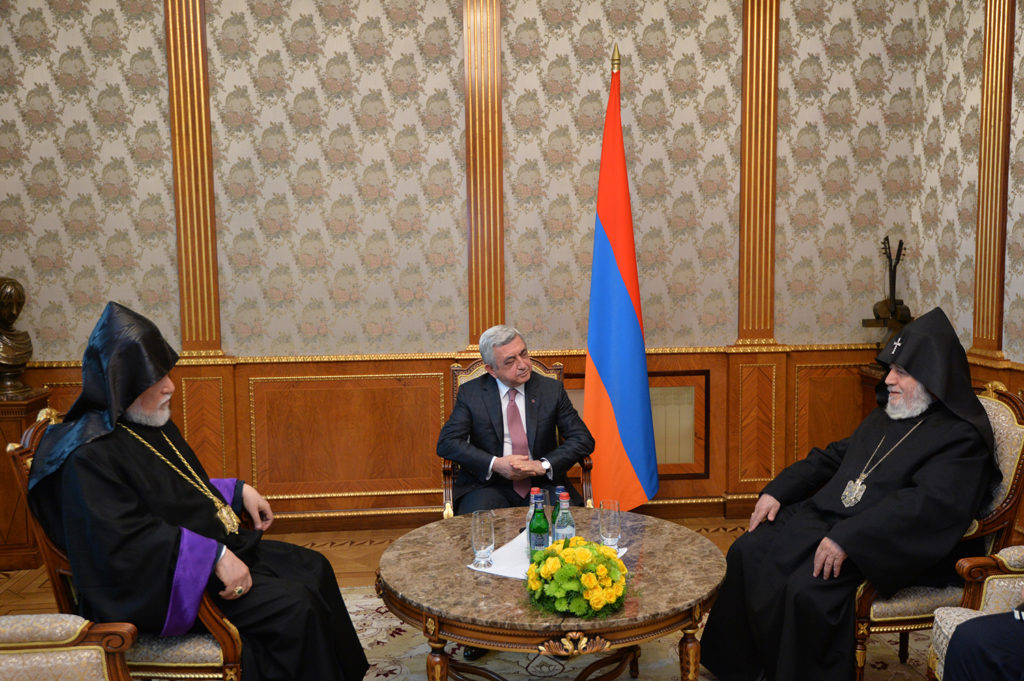 THE “VELVET REVOLUTION” AND THE ARMENIAN APOSTOLIC CHURCH. ARMENIANS DEMAND THE RESIGNATION OF KAREKIN II.
Nigar SHİRALİZADE 25.06.2018
-
25.01.2016
THE ARMENIAN QUESTION - BASIC KNOWLEDGE AND DOCUMENTATION -
12.06.2024
THE TRUTH WILL OUT -
27.03.2023
RADİKAL ERMENİ UNSURLARCA GERÇEKLEŞTİRİLEN MEZALİMLER VE VANDALİZM -
17.03.2023
PATRIOTISM PERVERTED -
23.02.2023
MEN ARE LIKE THAT -
03.02.2023
BAKÜ-TİFLİS-CEYHAN BORU HATTININ YAŞANAN TARİHİ -
16.12.2022
INTERNATIONAL SCHOLARS ON THE EVENTS OF 1915 -
07.12.2022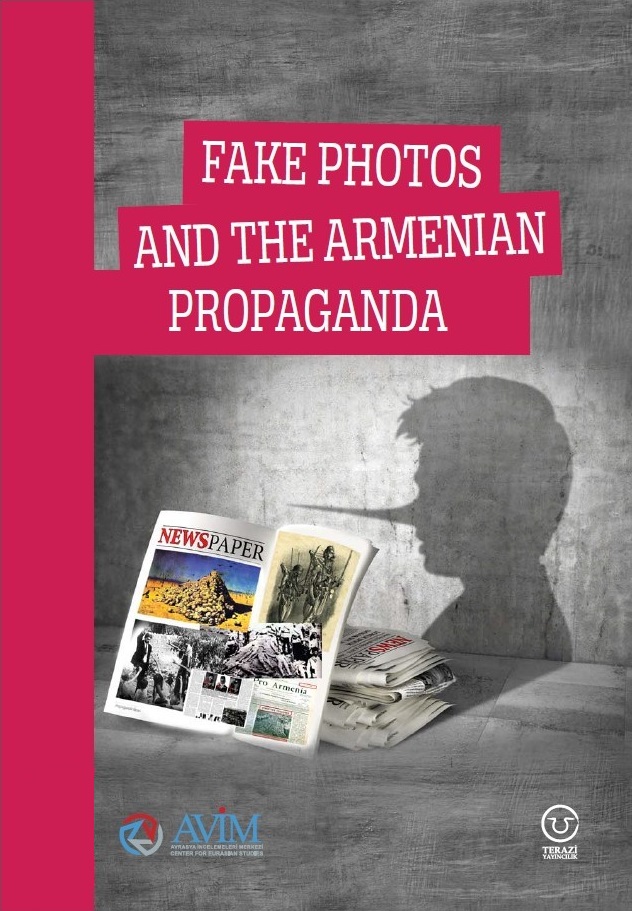
FAKE PHOTOS AND THE ARMENIAN PROPAGANDA -
07.12.2022
ERMENİ PROPAGANDASI VE SAHTE RESİMLER -
01.01.2022
A Letter From Japan - Strategically Mum: The Silence of the Armenians -
01.01.2022
Japonya'dan Bir Mektup - Stratejik Suskunluk: Ermenilerin Sessizliği -
03.06.2020
Anastas Mikoyan: Confessions of an Armenian Bolshevik -
08.04.2020
Sovyet Sonrası Ukrayna’da Devlet, Toplum ve Siyaset - Değişen Dinamikler, Dönüşen Kimlikler -
12.06.2018
Ermeni Sorunuyla İlgili İngiliz Belgeleri (1912-1923) - British Documents on Armenian Question (1912-1923) -
02.12.2016
Turkish-Russian Academics: A Historical Study on the Caucasus -
01.07.2016
Gürcistan'daki Müslüman Topluluklar: Azınlık Hakları, Kimlik, Siyaset -
10.03.2016
Armenian Diaspora: Diaspora, State and the Imagination of the Republic of Armenia -
24.01.2016
ERMENİ SORUNU - TEMEL BİLGİ VE BELGELER (2. BASKI)
-
AVİM Conference Hall 24.01.2023
CONFERENCE TITLED “HUNGARY’S PERSPECTIVES ON THE TURKIC WORLD"