













On both sides of the Atlantic Ocean, Armenian nationalists with a long record of hostility against Turks are nevertheless supporting Armenian Prime Minister Nikol Pashinyan against the political ambitions and the nationalist agenda of Catholicos of Etchmiadzin Karekin II, considered to be the most senior ranking official of the Armenian Apostolic Church, who has tried to sabotage the peace policy of the Armenian government toward Azerbaijan and Türkiye.
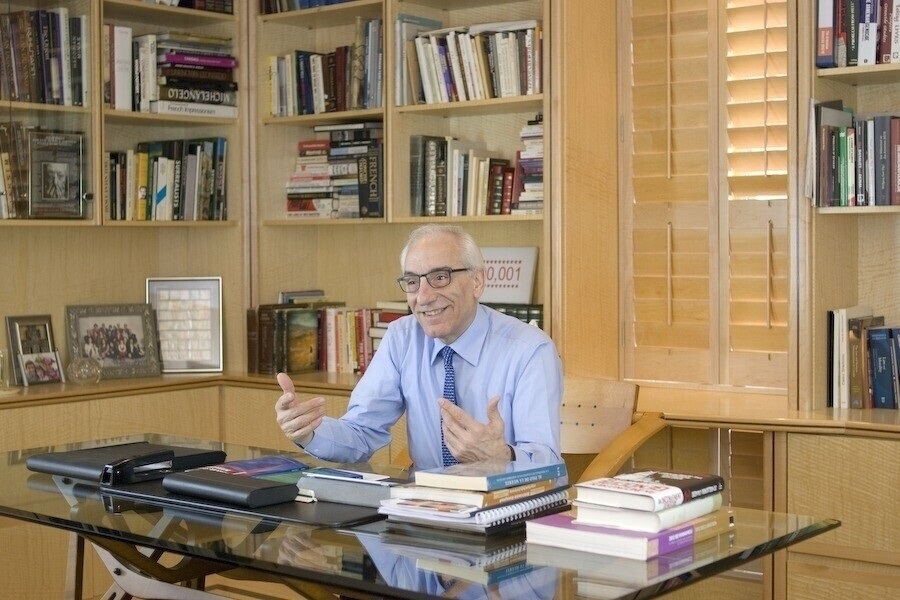
In an op-ed published in December 2025 by ArmenPress (Yerevan) and then by The Armenian Mirror-Spectator (the media organ of the Ramkavar Party in the United States), Greg Sarkissian, Director of the Zoryan Institute (whose roots trace back to the Armenian Revolutionary Federation - ARF/Dashnak Party) explains:
“Armenia is a sovereign republic. Sovereignty means that ultimate authority over national affairs rests with the state and is exercised through constitutional institutions and the rule of law. Within a single territory, there cannot be two equal centers of authority without undermining governance, accountability, and national coherence. […]
The separation of church and state is therefore not an expression of hostility toward religion, nor does it diminish the moral or spiritual importance of the Armenian Apostolic Church. On the contrary, separation protects both institutions.”
This declaration is common sense, but remarkable in every aspect. ARF has been at the frontline against Mr. Pashinyan since the signing of the ceasefire with Azerbaijan in November 2020. ARF tried to overthrow the Armenian Prime Minister, including by force, especially in 2022. The organization vehemently opposed the return of four occupied villages to Azerbaijan in 2024 and the Washington agreements of 2025, especially the one regarding the opening of the Zengezur corridor. ARF has had its own church since the schism of 1956 (motivated by purely political reasons), which is unsurprising given that Armenian nationalism is often impossible to separate from religion. Correspondingly, the Zoryan Institute itself has always promoted a staunchly nationalist narrative on the tragedy of 1915-1916[1] as well as on the Karabakh issue.[2]
The fact that a Ramkavar media organ reproduced such an op-ep by Mr. Sarkissian, irrespective of adding the disclaimer that the views expressed in the said op-ed are solely those of the author, is no less interesting. Since it was established in 1907 (it later merged with a similar organization, the Armenakan, in 1921), the Ramkavar is a national-religious party and has always been closely connected to the Armenian Apostolic Church. The Ramkavar had also opposed for years the peace policy of Mr. Pashinyan.
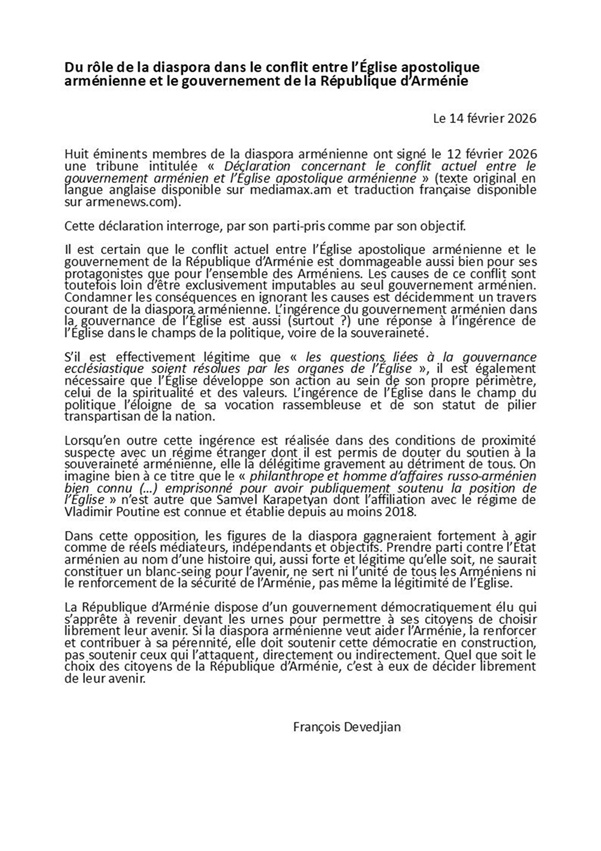
In February 2026, François Devedjian has published a kind of communiqué on the same issue (a copy of this document can be found at the end of this article), and defending conclusions similar to those of Mr. Sarkissian, indicated; “The interference of the Armenian government in the governance of the church is also (above all?) a response to the interference of the church in the field of politics, or even in the one of sovereignty.” He continued in affirming that the Church can unify only if this institution stays away from politics and that the Diaspora cannot make decision on behalf of the citizens of Armenia; instead, the Diaspora should “support this [Armenia’s] democracy in construction.” And for the first time in his life (as far as the author of this article could check), Mr. Devedjian directly criticized Russian President Vladimir Putin, for backing the Catholicos against the Armenian government.
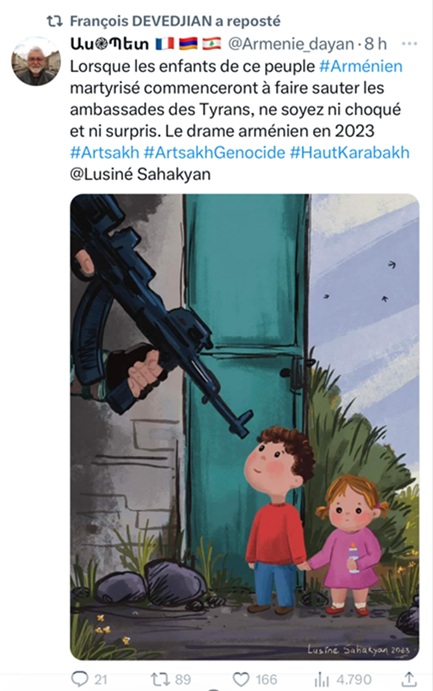
This is a U-turn for Mr. Devedjian. The son of Patrick Devedjian, the lawyer of JCAG and ASALA terrorists who perpetuated assassination campaigns against Turkish targets (specifically diplomats and their family members), he had advocated a nationalism as radical as the one of his father for years, and with a wording at least as virulent as the one of his father. For example, in February 2024, he re-posted on social media an explicit call to bomb Turkish and Azerbaijani embassies (please see the screenshot at the end of this article).
There are of course reasons for such spectacular changes. Most probably, such changes are related to the consolidation of Mr. Pashinyan’s political power and in the weakening of his enemies. The demonstrations, organized by the Apostolic Church and ARF, against the return of four villages to Azerbaijan, in 2024, were failures. Since the European Union-brokered Prague declaration of October 2022 (on the mutual recognition of territorial integrity by Armenia and Azerbaijan), and even more since the expulsion, in summer 2024, of Russian FSB officers who hitherto controlled the airport of Yerevan, Mr. Pashinyan for sure enjoys the support of the EU. Since the signing of the Washington agreements in summer 2025, he is also firmly supported by the US. Both the EU and the US see their interest in the compromise found on the opening of the Zanguezur corridor, and opening such a corridor without Russian control. Both parties know that the details of the opening remain to be decided and that stability in Armenia is an essential condition for securing such decisions.
In these conditions, even diaspora nationalists such as Mr. Sarkissian and Mr. Devedjian seem to have concluded that it is counterproductive to oppose the Pashinyan government (who is in a safe position to win again the legislative elections in Armenia) and to identify the “Armenian cause” with Russia and Iran (both of which have suffered significant losses in the recent past) that are unpopular both in the EU and the US. A survey published in March 2025 showed that 86% of the interviewed French had a negative opinion of Russian President Putin (the figure is 82% among Marine Le Pen’s voters). Regardless, Franck “Mourad” Papazian, a member of ARF’s world bureau, seems unmoved. He declared in January 2025 that “restoring relations with Russia is a strategic priority for Armenia. You cannot have an anti-Russian government in Armenia”. Then, in September of the same year, he claimed that Iran is a “victim” of international sanctions. Hostility against peace and distrust towards European and American policies are a general trend among the party’s leaders.[3] Though it seems ARF will not change (or likely never change) in the foreseeable future, the fact that some ARF members and the party’s fellow travelers are now distancing themselves from the said party is a significant development.
*Picture: Greg Sarkissian, Founder and President of the Zoryan Institute
[1] The manipulations of sources and the unsubstantiated allegations by Vahakn Dadrian, a former director of the Zoryan Institute, who passed away in 2019, is a topic in itself: Mary Schaeffer Conroy, “Book Review,” The Social Science Journal, Vol. 37, No. 3, July 2000, p. 481 ; Maxime Gauin, “Uneven Repression. The Ottoman state and its Armenians,” in Edward J. Erickson (ed.), A Global History of Relocation in Counter-Insurgency Warfare, London-New York; Bloomsbury Academic, 2019, p. 127 ; Guenter Lewy, The Armenian Massacres in Ottoman Turkey, Salt Lake City: University of Utah Press, 2005, pp. 43-128.
[2] Gerard Libaridian, (ed.), The Karabagh File. Documents and Facts, 1918-1988, Toronto, 1988. Mr. Libaridian led the ARF group who attacked the Turkish consulate in Los Angeles in 1972 and testified for ARF terrorist Max Hraïr Kilndjian in 1982. For a more objective approach: Antoine Constant, L’Azerbaïdjan, Paris: Karthala, 2002 ; Michael Gunter and Hakan Yavuz, The Karabakh Conflict Between Armenia and Azerbaijan, New York: Palgrave MacMillan, 2022.
[3] See, for example: Harout Mardirossian, “Des leçons à méditer”, France-Arménie, December 2025, p. 3 ; Harout Mardirossian, “Aux urnes, citoyens”, France-Arménie, January 2026, p. 3.
© 2009-2025 Center for Eurasian Studies (AVİM) All Rights Reserved
No comments yet.
-
 WHAT KIND OF “RECONCILIATION” IS THE HRANT-DINK FOUNDATION PROMOTING?
Maxime GAUIN 19.03.2015 -
 PROMINENT SUPPORTER OF ARMENIAN LOBBIES IN FRANCE SENTENCED FOR CORRUPTION
Maxime GAUIN 22.10.2015 -
 FROM TERRORISM TO INVASION AND MASSACRE: GILBERT LEVON MINASSIAN
Maxime GAUIN 28.02.2025 -
 WHO IS RESPONSIBLE FOR THE CLOSING OF TURKISH-ARMENIAN BORDER?
Maxime GAUIN 04.02.2015 -
 THE TURKISH-ARMENIAN DISPUTE: WHO HAS SOMETHING TO HIDE?
Maxime GAUIN 13.10.2014
-
 UNDERSTANDING NAGORNO-KARABAKH DESPITE THE BIASED MANNER OF THE WESTERN MEDIA
Tutku DİLAVER 21.01.2021 -
 TAL BUENOS AND TÜLİN DALOĞLU’S INTERVIEWS ON THE 1915 EVENTS
AVİM 01.07.2015 -
 AVIM AND AZERBAIJAN SAM ARE CO-HOSTING A CONFERENCE ON THE NAGORNO-KARABAKH CONFLICT
Hande Apakan 17.11.2014 -
ARMENIA SUSPENDS THE RATIFICATION OF THE PROTOCOLS
Ömer Engin LÜTEM 22.04.2010 -
THE TWELFTH SUMMIT OF THE ECONOMIC COOPERATION ORGANIZATION (ECO)
Alev KILIÇ 17.10.2012
-
25.01.2016
THE ARMENIAN QUESTION - BASIC KNOWLEDGE AND DOCUMENTATION -
12.06.2024
THE TRUTH WILL OUT -
27.03.2023
RADİKAL ERMENİ UNSURLARCA GERÇEKLEŞTİRİLEN MEZALİMLER VE VANDALİZM -
17.03.2023
PATRIOTISM PERVERTED -
23.02.2023
MEN ARE LIKE THAT -
03.02.2023
BAKÜ-TİFLİS-CEYHAN BORU HATTININ YAŞANAN TARİHİ -
16.12.2022
INTERNATIONAL SCHOLARS ON THE EVENTS OF 1915 -
07.12.2022
FAKE PHOTOS AND THE ARMENIAN PROPAGANDA -
07.12.2022
ERMENİ PROPAGANDASI VE SAHTE RESİMLER -
01.01.2022
A Letter From Japan - Strategically Mum: The Silence of the Armenians -
01.01.2022
Japonya'dan Bir Mektup - Stratejik Suskunluk: Ermenilerin Sessizliği -
03.06.2020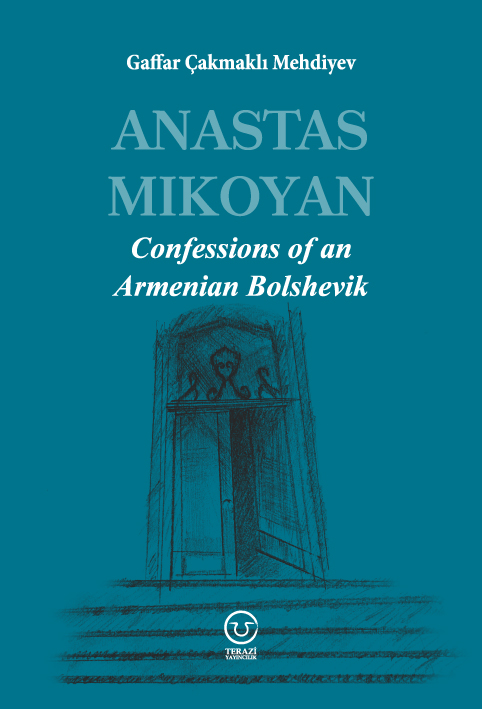
Anastas Mikoyan: Confessions of an Armenian Bolshevik -
08.04.2020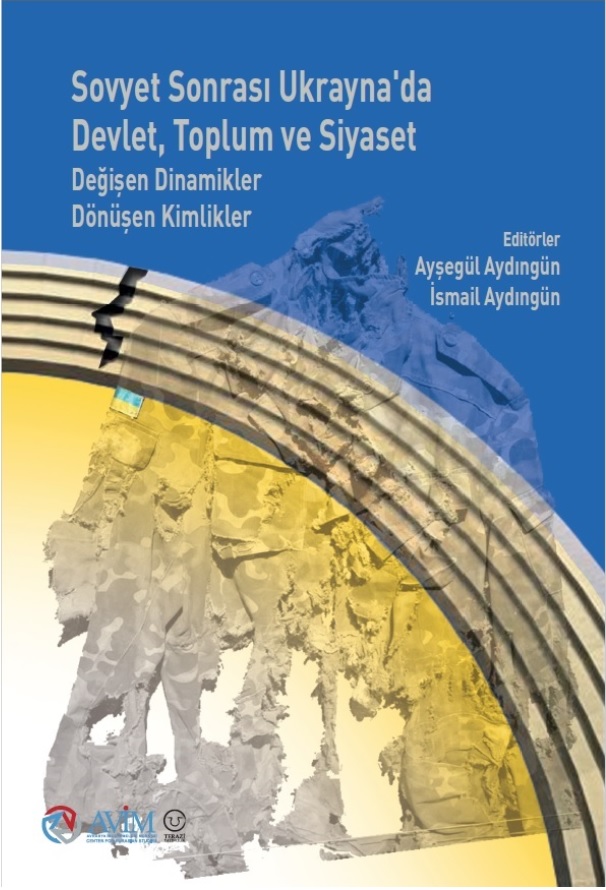
Sovyet Sonrası Ukrayna’da Devlet, Toplum ve Siyaset - Değişen Dinamikler, Dönüşen Kimlikler -
12.06.2018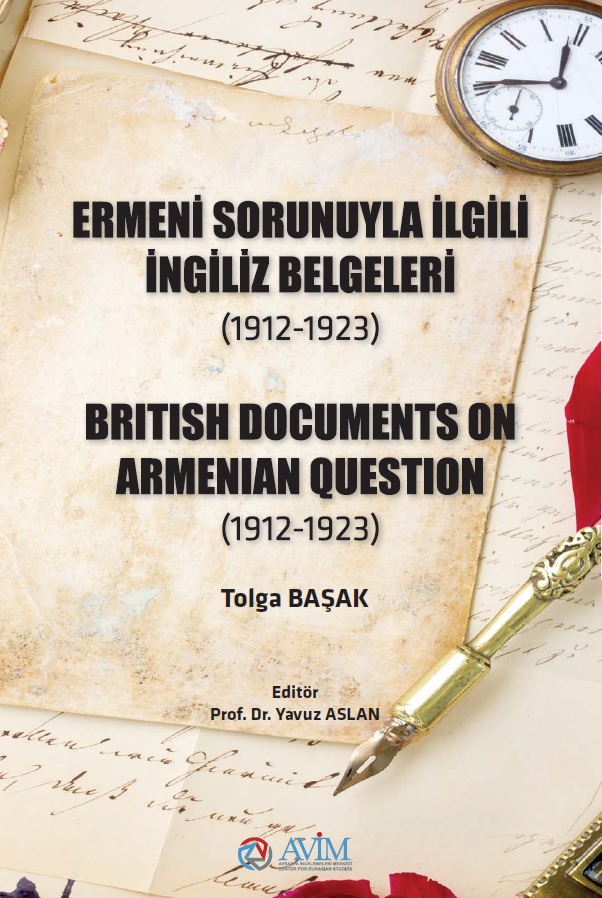
Ermeni Sorunuyla İlgili İngiliz Belgeleri (1912-1923) - British Documents on Armenian Question (1912-1923) -
02.12.2016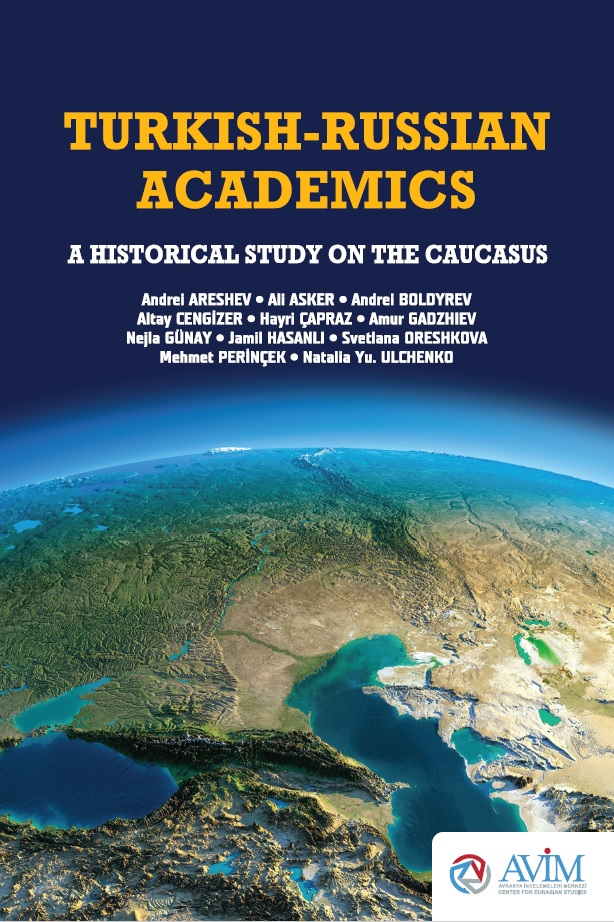
Turkish-Russian Academics: A Historical Study on the Caucasus -
01.07.2016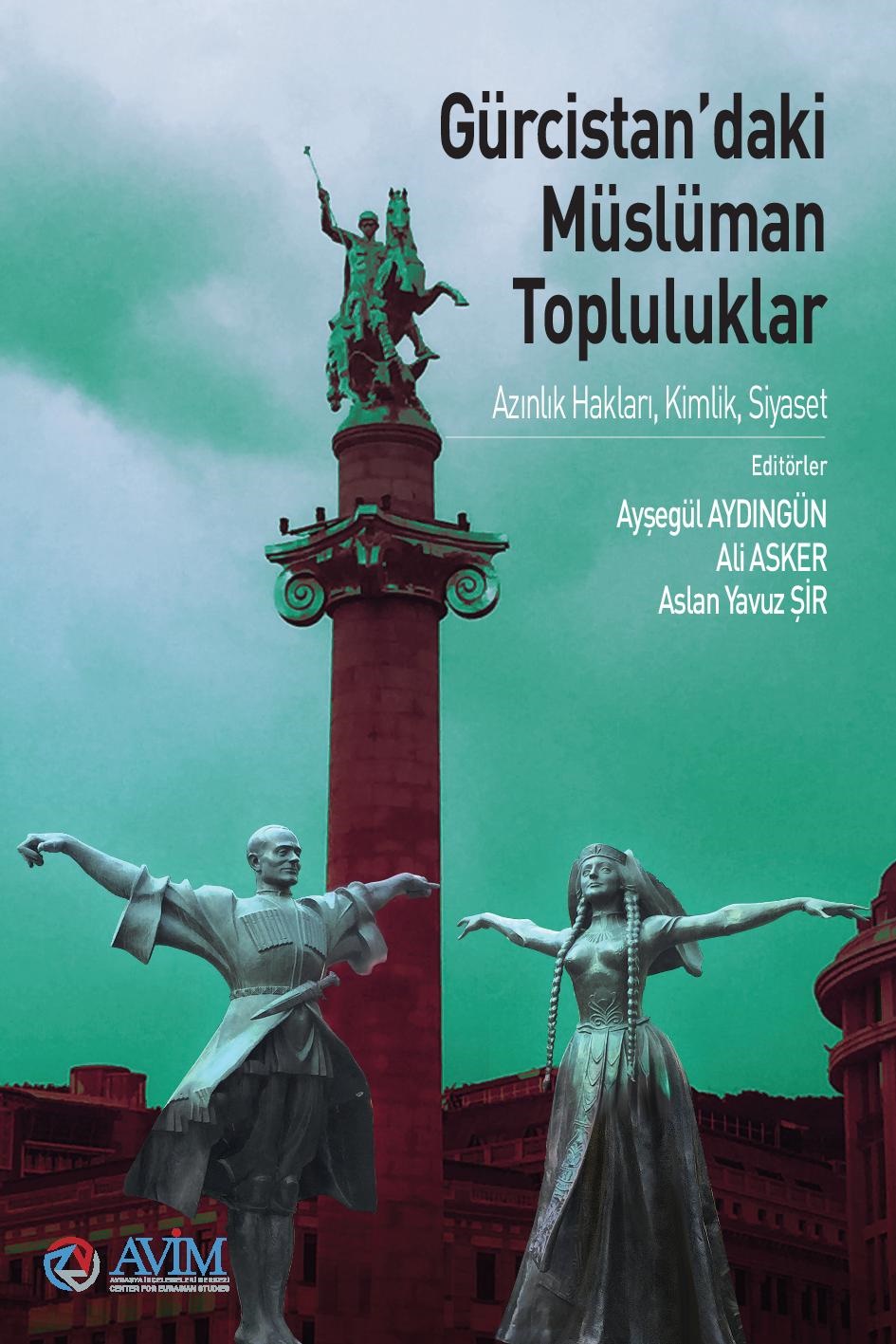
Gürcistan'daki Müslüman Topluluklar: Azınlık Hakları, Kimlik, Siyaset -
10.03.2016
Armenian Diaspora: Diaspora, State and the Imagination of the Republic of Armenia -
24.01.2016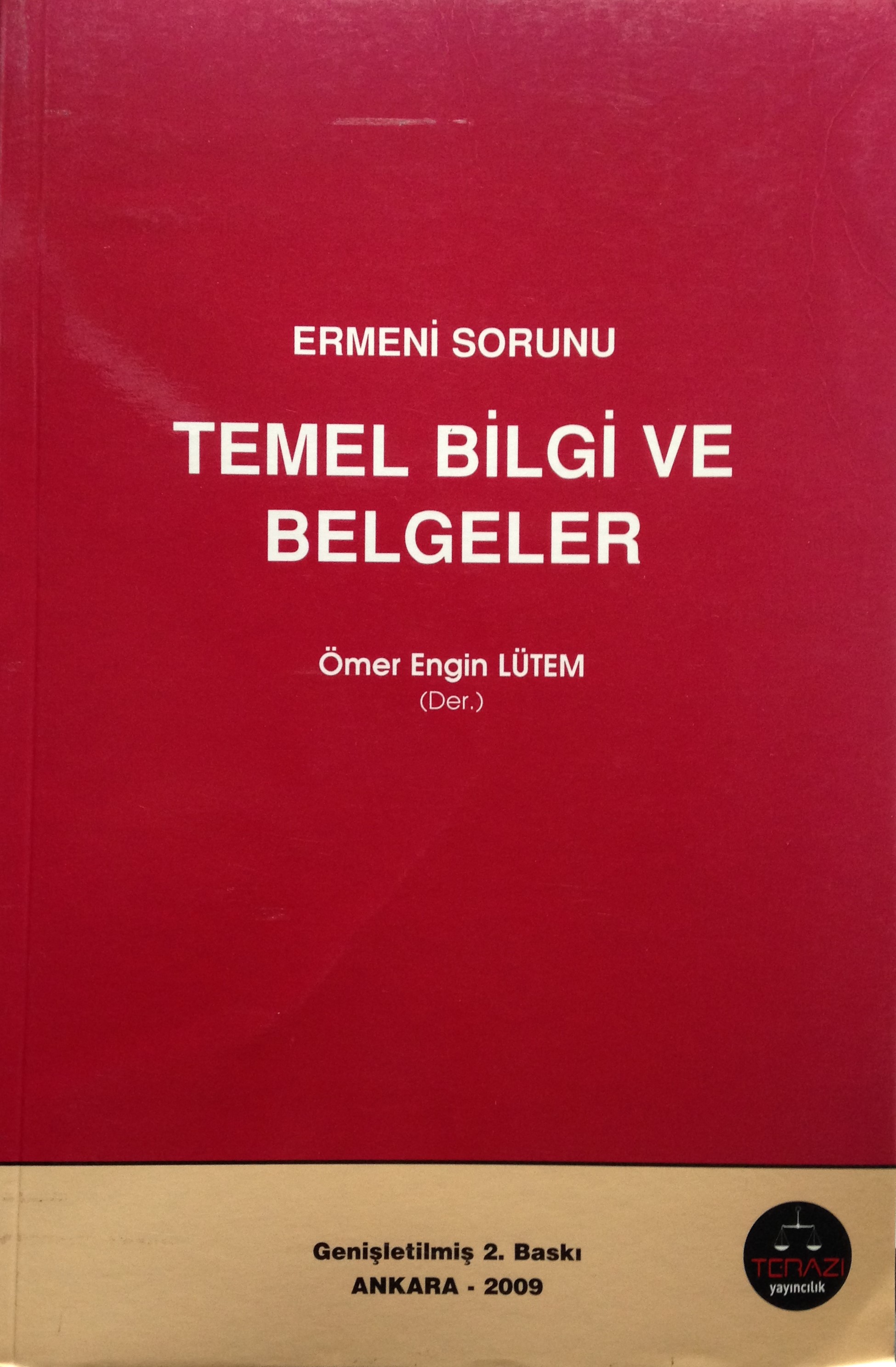
ERMENİ SORUNU - TEMEL BİLGİ VE BELGELER (2. BASKI)
-
AVİM Conference Hall 24.01.2023
CONFERENCE TITLED “HUNGARY’S PERSPECTIVES ON THE TURKIC WORLD"