














Recently, Kyle Orton, a British journalist and writer, wrote a very interesting and lengthy article[1] on the role of Armenian Revolutionaries in the late Ottoman State (Empire). According to Orton, academics have been somewhat hesitant in “giving full recognition to the achievements of the Ottoman-Armenian revolutionaries in developing their movement from the 1890s, the consistency and efficacy of their provocation strategy over two decades, the scale of the rebellion they managed in 1914-15, and their political versatility in securing external support.” And here his survey article makes a major contribution, highlighting the roles and agency of Armenian revolutionaries in the fall of the Ottoman State.
Orton begins by covering the emergence of the Armenian Question in aftermath of the Berlin Congress, which brought the issue to the attention of the European Powers and made it a subject of European diplomacy. The nascent Armenian national movement then tied its political aspirations to the European patronage. According to Orton, the Bulgarian example “leading to a Russian intervention that secured independence—inspired emulators among the Armenians.” This did not go unnoticed and in the following decades, the efforts to internationalize Armenian issue created fear and resentment among the Ottoman Muslims.
The next decade also witnessed the founding of the Armenian revolutionary committees, namely, the Armenakan Party (1885), the Hunchakian Revolutionary Party (1887), and the Armenian Revolutionary Federation/Dashnaktsutyun (1890). These groups exacerbated ethnic tensions by engaging in acts of terrorism and provocation intended to spark Muslim counter-attacks and European intervention.
A pivotal section of the article deals with the reign of Sultan Abdulhamid II. To counterbalance Armenian aspirations, the Sultan formed the Hamidiye Cavalry Regiments, the irregular cavalry units composed of tribesmen in Eastern Anatolia.
Orton points out a tragic irony in the revolutionary strategy of the time as some revolutionaries hoped that by inciting attacks and revolts, they would trigger Muslim reactions, which would then force European powers (Britain, France, Russia) to intervene. The most famous act of this era was the 1896 seizure of the Ottoman Bank in Istanbul by the Dashnaks, intended to bring European intervention. Instead, it triggered clashes between Armenians and Muslims. The same sequence of events were witnessed in many parts of the empire.
Armenians who distanced themselves from and condemned the violence of the revolutionaries were also targeted. For example, in 1894, Armenian Patriarch Khoren Ashekian “powerfully condemned the Armenian nationalists for sowing communal strife that could only lead to disaster for Armenians” and as a result the Hunchaks tried “to assassinate Ashekian twice.” In the following decades, the Dashnaks would overtake the Hunchaks in their attempts at rebellion, terror and all forms of violence. Orton notes:
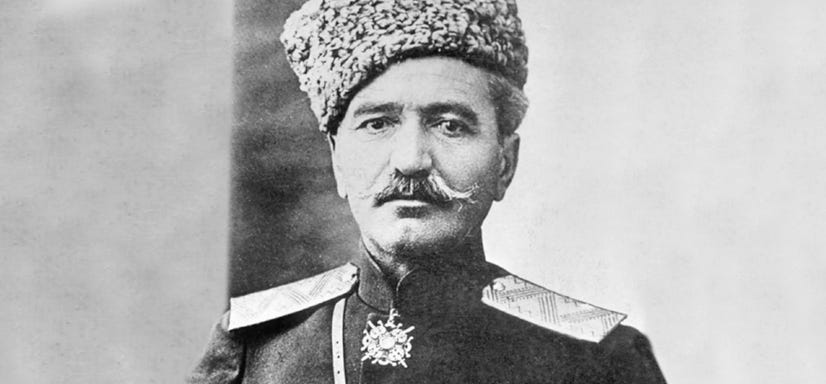
“In March-April 1904, another Armenian revolt rocked Sasun. Hundreds of Dashnaks, led by Andranik, infiltrated the area from Russia, distributed weapons to local rebels, and began attacking Muslim villages, seemingly with the intention of provoking reprisals that could trigger European intervention. The Ottomans suppressed the revolt—the most prominent Dashnak martyr was Hrayr Dzhoghk—and thousands of Armenian civilians were reportedly massacred yet again, though the British Consul visited the area soon afterwards and said that, on the evidence he had seen, 'it would be difficult to sustain charges of massacre and atrocities'.”
The Young Turk Revolution of 1908 brought some changes to these dynamics as the Committee of Union and Progress (CUP) “had worked with the Armenian revolutionaries in opposition” and took steps to solve the Armenian Question. Orton lists these positive developments:
“The CUP equalised rights for Christians, creating increased legal space for Armenian political activism, granting Armenians permission to bear arms, and brought Christians into the Ottoman army, while taking measures to reduce the Kurdish threat to the Armenians by disbanding the Hamidiye, imprisoning renegade commanders, and appointing local administrators committed to disciplining the Kurds.”
In response, the Armenian committees “officially called off the terrorism campaign,” until their cooperation with the CUP ended in 1912. Orton notes, however, this official stance “did not always reflect ground reality in the provinces” as there was a “politics by day, terrorism by night” dimension to the Dashnaks.
Orton observes that the “the Ottoman defeat in the Balkan Wars of 1912-13” was the culminating point of the Ottoman decline and “the importance of this episode in shaping what happened in 1915 can hardly be overstated”, as the arrival of half-a-million Muslim refugees (muhacir), uprooted from their homelands and “bearing horror stories of massacres and worse,” only “inflamed sectarian sentiment further.” Meanwhile, Russian diplomacy and covert acts “fused the Balkan events with the Armenian Question in everyone’s mind”. Taking advantage of the Ottoman weakness and defeat, “Russia put the Armenian Question back on the international agenda,” demanding a special status for Eastern Anatolia. “A Reform treaty” was forced “on the Ottomans in February 1914” and it was signed “solely by Russia on behalf of the European Great Powers.”
At the beginning of the First World War, Armenian committees established contact with the Russian army and policymakers, and the Russian Foreign Minister Sazonov “told the Tiflis command to begin arming Armenians and Assyrian Christians inside the Ottoman State so that they could act behind the lines for Russia as soon as war began.” Orton notes that the Armenian committees fully knew the risk of the game that they were gambling:
“Aram Turabian, one of the Dashnaks’ chief propagandist-recruiters abroad (based in Paris), stated bluntly that the Armenian revolutionaries 'knew very well to what they were exposing the innocent inhabitants of the regions of Armenia under Turkish rule; but in the history of a people there are moments when … it becomes necessary to sacrifice … a part of the present generation to safeguard the future'."
The Russian armaments of Armenian committees were supposed to covert operations, but they were difficult to hide and soon began to pour into the Ottoman intelligence highlighting the activities of these committees and the result was total chaos and breakdown of social order in Eastern Anatolia:
“With Russian weapons available to all, Armenian guerrillas attacked the State and looted and massacred Muslim villages, and Kurdish irregulars nominally loyal to the State, Turkish and Kurdish gangs, and Muslim villagers raided and massacred Armenian settlements.”
As the war progressed, armies battled and advanced and retreated, the region was engulfed in violence with the civilian population suffering heavily. But during the wartime, the Armenians were not as shy as they turned out be after the war in admitting their roles:
“Russkoe Slovo, one of the largest mass-circulation Russian newspapers, published a letter from an Armenian lawyer named Calkus on 24 January 1915 reading: ‘In Turkey’s eyes, … we were guilty of treason. Armenians confess to this treason without any further ado. … The Armenian is a traitor to Turkey because Turkey is not his mother but his stepmother. A growing number of Armenians are volunteering in the ranks of the Russian army. They are streaming toward Russia from the far corners of the world … They believe in Russia and Russia’s mission.’ An Armenian deputy, the Kadet Mikayel Papadjanian, stated in the Russian Duma on 28 January 1915: ‘The Armenian population of Turkish Armenia joyously greeted our victorious [Russian] army. Armenians helped wherever and however they could, and prepared a hearty welcome for the Russians'.”
Promises were also made to the Entente powers to support an invasion of Cilicia through armed rebellion in the region. Delegations of Zeytun Armenians, Boghos Nubar, and the Dashnaks all separately appealed to the Entente for such an undertaking and eventually launching their rebellion in Zeytun, but the Entente Powers would instead land on Gallipoli rather than Cilicia.
In Eastern Anatolia, the Armenian insurgents were well-equipped, having access to stockpiles accumulated over a long period of time. In Van, they had the organizational capacity to ensure full control, and they were further bolstered by reinforcements arriving from other areas. In the Rebellion of Van, this enabled them to tie down “three Ottoman police divisions, the First Expeditionary Force, and the Kurdish militiamen wielding heavy weapons, including cannons, for a month.” The Armenian committees controlling Van promptly sent messengers to the Russian authorities, whom they regarded as allies supported by their resistance. “So soon after the insurrection in Zeytun, Van seemed to ratify the Ottoman perception that a generalised Russian-orchestrated Armenian rebellion was underway.”
Orton concludes that it was only while being attacked on several fronts, “with the fate of the Empire at stake and the invaders having recruited an enemy within,” that the Ottoman government decided to take active measures, arresting the Armenian committee members on 24 April and decreeing the temporary law on relocation and resettlement on 27 May.
In conclusion, Kyle Orton has written a balanced article on the role of Armenian revolutionary groups in the last decade of the Ottoman State. Standard Western accounts usually minimize, overlook, or deny their contributions of the escalation of inter-ethnic tensions and more importantly the massive violence they committed on the Muslim population who happened to be on their path during the war. For this alone, Orton’s work deserves credit.
*Picture: “Dashnak General Andranik” - Source: Kyle Orton’s Substack page
[1] Kyle Orton, “The Armenian Revolutionary Movement in the Ottoman Empire Up to 1915”, It Can Always Get Worse - Substack page by Kyle Orton, April 1, 2026, https://www.kyleorton.com/p/the-armenian-revolutionary-movement-in-the-ottoman-empire-up-to-1915
© 2009-2025 Center for Eurasian Studies (AVİM) All Rights Reserved
No comments yet.
-
 STATISTICAL INFORMATION REGARDING OTTOMAN ARMENIANS AND FOREIGN RESOURCES
AVİM 25.10.2021 -
 HOW DOES VON DER LEYEN'S DESCRIPTION OF “EUROPEAN WAY OF LIFE” COMPLY WITH EUROPEAN VALUES?
AVİM 30.09.2019 -
 CHAPTER BY CHAPTER SYNOPSIS AND REVIEW OF TURKS AND ARMENIANS: NATIONALISM AND CONFLICT IN THE OTTOMAN EMPIRE BY JUSTIN MCCARTHY - 6
AVİM 22.10.2015 -
DIASPORA ARMENIANS AND THEIR INITIATIVES FOR COMPENSATION: THE REFLECTIONS OF THE MOVSESIAN CASE
AVİM 12.02.2012 -
 THE ROOTS OF “NEMESIS” AND THE BACKGROUND OF RADICAL ARMENIAN NATIONALIST TERRORISM
AVİM 11.05.2023
-
 THE CHARMING MODERN SILK ROAD DAZZLES THE EU
Hazel ÇAĞAN ELBİR 29.04.2019 -
 FOREIGN INVESTMENTS IN CENTRAL ASIAN COUNTRIES AND CHINA'S ROLE
Gülperi GÜNGÖR 22.12.2020 -
 CHAPTER BY CHAPTER SYNOPSIS AND REVIEW OF TURKS AND ARMENIANS: NATIONALISM AND CONFLICT IN THE OTTOMAN EMPIRE BY JUSTIN MCCARTHY - 5
Mehmet Oğuzhan TULUN 22.10.2015 -
 CHAPTER BY CHAPTER SYNOPSIS AND REVIEW OF TURKS AND ARMENIANS: NATIONALISM AND CONFLICT IN THE OTTOMAN EMPIRE BY JUSTIN MCCARTHY - 3
Seher ÇELEN 22.10.2015 -
 PATRICK DEVEDJIAN: A NEO-FASCIST WHO WAS A LIFE-LONG SUPPORTER OF TERRORISM
Maxime GAUIN 02.04.2020
-
25.01.2016
THE ARMENIAN QUESTION - BASIC KNOWLEDGE AND DOCUMENTATION -
12.06.2024
THE TRUTH WILL OUT -
27.03.2023
RADİKAL ERMENİ UNSURLARCA GERÇEKLEŞTİRİLEN MEZALİMLER VE VANDALİZM -
17.03.2023
PATRIOTISM PERVERTED -
23.02.2023
MEN ARE LIKE THAT -
03.02.2023
BAKÜ-TİFLİS-CEYHAN BORU HATTININ YAŞANAN TARİHİ -
16.12.2022
INTERNATIONAL SCHOLARS ON THE EVENTS OF 1915 -
07.12.2022
FAKE PHOTOS AND THE ARMENIAN PROPAGANDA -
07.12.2022
ERMENİ PROPAGANDASI VE SAHTE RESİMLER -
01.01.2022
A Letter From Japan - Strategically Mum: The Silence of the Armenians -
01.01.2022
Japonya'dan Bir Mektup - Stratejik Suskunluk: Ermenilerin Sessizliği -
03.06.2020
Anastas Mikoyan: Confessions of an Armenian Bolshevik -
08.04.2020
Sovyet Sonrası Ukrayna’da Devlet, Toplum ve Siyaset - Değişen Dinamikler, Dönüşen Kimlikler -
12.06.2018
Ermeni Sorunuyla İlgili İngiliz Belgeleri (1912-1923) - British Documents on Armenian Question (1912-1923) -
02.12.2016
Turkish-Russian Academics: A Historical Study on the Caucasus -
01.07.2016
Gürcistan'daki Müslüman Topluluklar: Azınlık Hakları, Kimlik, Siyaset -
10.03.2016
Armenian Diaspora: Diaspora, State and the Imagination of the Republic of Armenia -
24.01.2016
ERMENİ SORUNU - TEMEL BİLGİ VE BELGELER (2. BASKI)
-
AVİM Conference Hall 24.01.2023
CONFERENCE TITLED “HUNGARY’S PERSPECTIVES ON THE TURKIC WORLD"